We live in an era of DIY – Do It Yourself – and one of the most important tools that everyone should bring home is a Step Drill bit. These drills are used to cut holes of varying diameters on thin sheets of metal, plastic, drywall, particleboard, and whatnot.
However, one can make good works only by using the drill bit in the right way. With a tool as versatile as a step drill bit, you can’t just start right away without prior knowledge to ensure safety and maximum efficiency. If you haven’t used this multi-functional toll before or are planning to get your own set of step drill bits, then you’re on the right platform.
After reading this article till the end¸ you’ll be equipped with enough knowledge to use this amazing tool to the best of your ability.

What is a Step Drill Bit
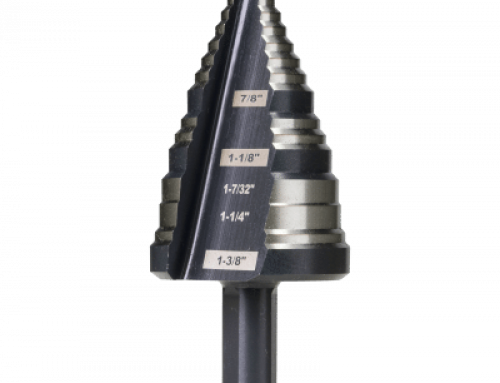
A step drill is roughly a conical bit with a step-wise profile. Because of its unique design, a single-step drill bit can be used for making holes of varying sizes.
As the name indicates, a step drill has different steps for drilling holes of the desired diameter. Its head has a pointed angle that allows the drill to center itself in the material conveniently. Apart from small point angles, step drill bits also have corresponding pointings, making them suitable for cutting holes in thin metal sheets.
What Color is the Step Drill
Step drill bits are mostly coated with titanium for extra durability and prolonging their life. These bits are available in a range of colors from Yellow, White, Black, Grey, Blue, and so on. However, you’ll often see them in dark colors due to TIAN coating.

Using a Step Drill Bit Properly
Whether you’re using the step drill for the first time or you have been using it for a while, the below tips will help you use it appropriately.
- Take Safety Precautions
First and foremost, the users need to learn the basics of step drills to ensure safety.
Goggles: Always wear the eye goggles making holes with a step drill as there’s a high chance of material shavings and splinters flying in your face and eyes.
Gloves: Wear gloves to avoid metal shavings or other bits ricocheting off surroundings from hurting your hands.
Foot Protection: While dealing with any sharp object, wear working shoes or boots to prevent any injury to your foot.
Safe Clothing: Avoid wearing loose clothes, necklaces, or anything that might get caught in the drill.
- Choosing the Right Equipment
Here is a list of equipment you need by your side before starting to work:
- Step drill bits
Based on the nature and thickness of the material in which you’re drilling holes and the required hole sizes, choose an appropriate drill bit. Note that there’s a separate step drill bit for wood, plastic, stainless steel, aluminum, and iron.
A single-step drill bit can make a hole of varying diameters and because of this, just a one-step drill bit can replace many normal bits.
- Power Tool
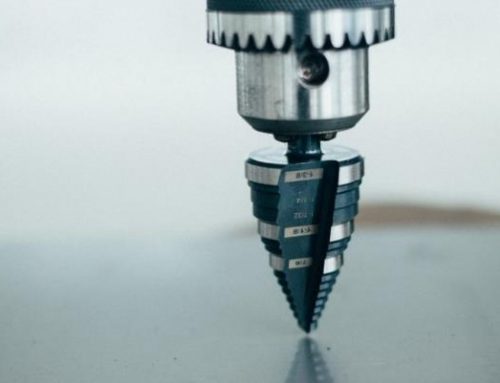
A portable drilling machine such as a rotary drill and cordless drill driver is needed to use step drill bits. Be careful while attaching to and/or changing the drill pits in your drilling machine.
- Cutting Fluid
The drilling machine gets heated rather quickly. So, if you have to drill many holes, add an appropriate lubricant, coolant, or cutting fluid and cover the drill in this cutting fluid to avoid overheating and minimize the friction between the frill and the material.
Note that never use the drilling work if you’re tired or in a bad mood.
- Start Drilling
Now is the time to start drilling. Align the drill machine to the center mark and press down the trigger. With a step drill bit, you don’t need a center punch to get started as in the case of using normal drill bits.
Drill vertically at low speed and moderate pressure. As you get to the desired hole, reduce the drilling speed and force. With just one drill bit, you can increase the hole’s depth as needed.
- Take Regular Breaks
No matter how good of a quality drill machine you’re using, it gets heated up rather quickly. Take regular intervals while you’re drilling holes to give a rest to the drilling motor.
Also, apply cutting fluid to keep the drill cold as overheating can head to sparking or worse, damage the material you’re drilling in.
- Clean the Drill
After completing work your work, don’t just pack the equipment right away. Remove the drill bit and thoroughly clean all the items to remove any particles or shavings. Sometimes, you may have to polish the drill bits – especially if you have made holes in a metal sheet.
Not cleaning the drilling equipment leads to reduce lifetime. Try to get a proper drill container that can store the drill bits and the power tool securely for extended periods.
Tips for Using Step Drill Bits
The below tips prove to be extremely useful while using step drill bits.
The below tips prove to be extremely useful while using step drill bits.
- Hold the drill straight and steady while dressing. Having a tilted rill can make oblong holes.
- Do not exert excessive pressure on the drill.
- Always go slow to avoid stepping past the required hole depth
- Take regular breaks and use cutting fluid to cool down the drill
- Use a pilot hole for making holes of larger diameter
- Remove the bit frequently while drilling larger holes to prevent overheating of the instrument.
Hopefully, this article will help you better understand how to use a step drill bit properly. Feel free to ask any questions.
- Hold the drill straight and steady while dressing. Having a tilted rill can make oblong holes.
- Do not exert excessive pressure on the drill.
- Always go slow to avoid stepping past the required hole depth
- Take regular breaks and use cutting fluid to cool down the drill
- Use a pilot hole for making holes of larger diameter
- Remove the bit frequently while drilling larger holes to prevent overheating of the instrument.
Hopefully, this article will help you better understand how to use a step drill bit properly. Feel free to ask any questions or you can go to this page for more information.